

October 5, 2026
Community Partnership Helps Staunton City Schools Address Food Insecurity for Students Year-Round
For families facing housing instability or financial hardship, school breaks can bring an added challenge. Students who rely on receiving most of their meals at school often go without when school is not in session. In Staunton City Schools, a growing partnership with the Blue Ridge Area Food Bank is helping bridge that gap, both during extended school breaks and throughout the year.
The partnership began three years ago, shortly after Tina Capuano took the position of Student Services Coordinator in Staunton City Schools. As part of her new role, Capuano became the division’s McKinney-Vento liaison and began working to connect students and families experiencing homelessness and other families in need with community resources. Looking for ideas, she started talking with neighboring school divisions about partnerships they had developed.
One conversation led her to learn that Waynesboro partnered with the Blue Ridge Area Food Bank to distribute food boxes during a back-to-school event. Capuano reached out to Colleen Berger at the food bank to ask whether there might be a way to provide similar support to Staunton families before extended school breaks. The answer was an enthusiastic yes.
The food bank already offered an Extended Break Food Box Program. This was an especially good fit for Staunton City Schools, where students have a full week off at Thanksgiving, two weeks during winter break and another week for spring break. Through this partnership, families can receive food boxes before each of those breaks and twice during the summer.
Making Food Access as Easy as Possible
At the beginning of the school year, Capuano shares a Google Form with families through school open houses, the division’s back-to-school event, and her direct outreach to families experiencing homelessness to determine how many food boxes will be needed. No financial disclosure is required. Families can also indicate whether transportation is a barrier. Approximately 120 families have signed up for the program, and the Staunton City Schools leadership team delivers boxes to about 30 families who do not have transportation.
The support is intentionally flexible. Families do not have to take a box simply because they signed up. Some families let Capuano know that they are doing well at the time and do not need the additional food, allowing those resources to remain available for another family. It was this flexibility that became the foundation for the division’s Families in Transition Resource Pantry.
Capuano launched the pantry last year using food drives and any unused extended-break boxes. The pantry provides an immediate source of food when a family becomes homeless during the school year or when another family in the division experiences unexpected financial hardship.
A Partnership That Continues to Grow
Initially, the pantry depended heavily on community food drives. Student organizations helped collect donations, and the effort became part of Staunton’s Kindness Matters initiative. The division also partnered with the local mail carrier food drive, receiving a portion of the food collected in the community while the remainder went to the Blue Ridge Area Food Bank. Then the food bank presented Staunton with an opportunity to significantly expand the program.
Because of the economic makeup of the community, Staunton City Schools qualified to participate in the Blue Ridge Area Food Bank’s School Pantry Program. Through the program, Capuano can now order up to $3,000 in bulk food each month to stock the pantry at no cost to the school division.
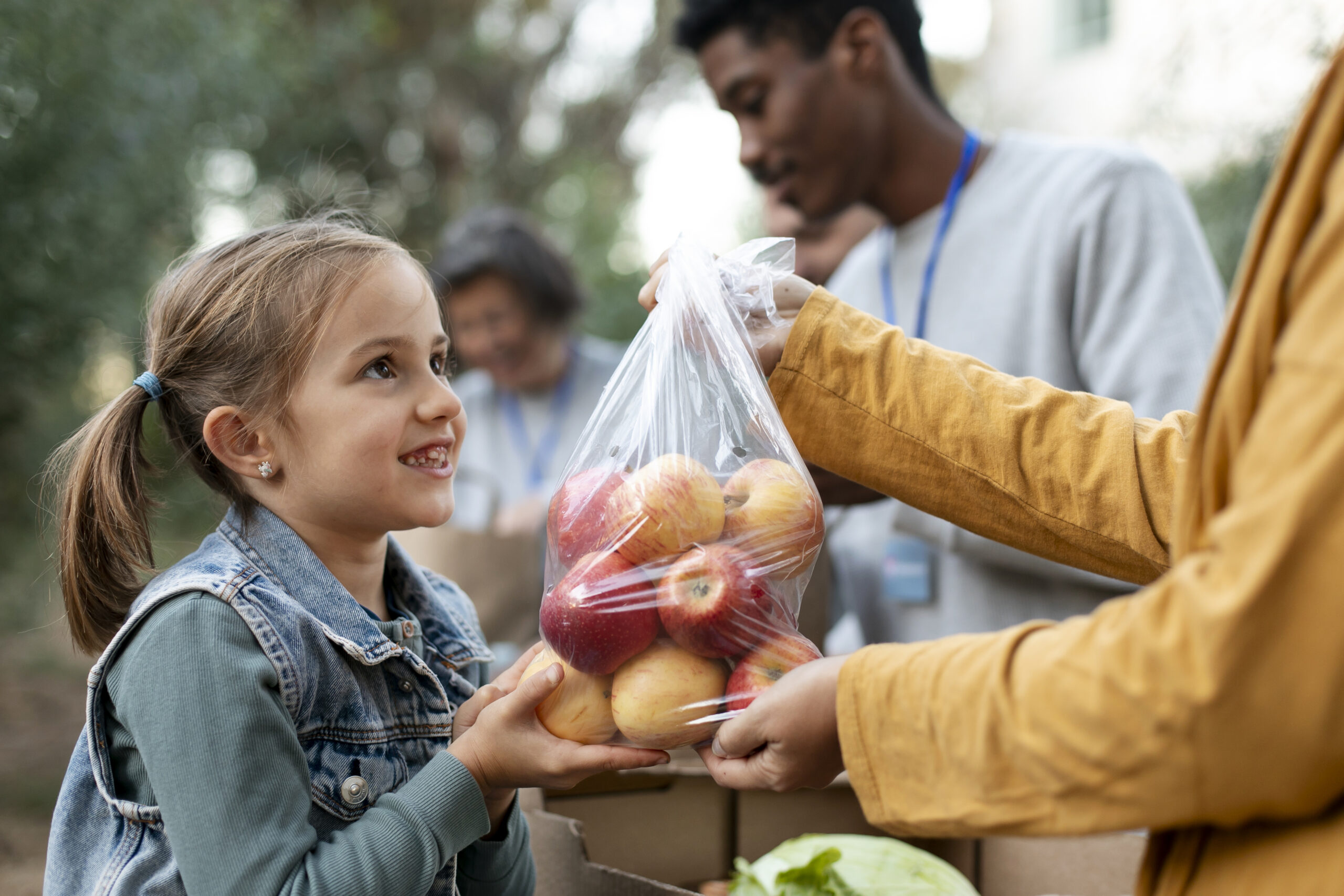
The partnership also made it possible to offer fresh produce to students and families. Because the pantry is housed at the division’s preschool building, Capuano coordinates produce distributions with monthly parent education sessions for preschool families. Twenty-pound boxes of fresh produce are distributed alongside other food ordered through the program.
Capuano has been thoughtful about building the program in a way that is sustainable for a small school division. Rather than taking on the additional responsibility of storing and monitoring large amounts of fresh food, she and the food bank developed relationships with community partners, like local church pantries, who can accept any surplus.
“We wanted to make sure that we had a plan in place, that the food doesn’t go to waste,” Capuano said.
More Than Providing Food
This initiative also focuses on helping families make the most of the resources they receive. Capuano intentionally selects pantry foods that can be combined into simple meals and distributes four-ingredient recipes that correspond with the items families are given. Instead of telling families what they should or should not eat, she sees the recipes as a practical way to make healthy choices easier and more accessible.
“If I just hand out recipes that happen to match what I’m giving out,” Capuano explained, families already have what they need to prepare the meal.
She also shares ‘Food-Finder’ cards containing a QR code that families can scan to locate an available food pantry on any given day. The goal is to make families aware of resources throughout the community while ensuring they know the school division remains available when an unexpected need arises.
“This Is the Best Day Ever”
Capuano recounted watching a four-year-old boy leave a produce distribution with his mother. His mother carried the large box while he eagerly helped by carrying a pineapple and a potato.
“This is the best day ever,” he announced. For Capuano, the moment captured exactly why the partnership matters. “See, now that’s why we do this,” she explained.
Even when they do not need assistance, families express gratitude when they see Capuano at school. She says parents have told her they are simply comforted to know that this resource exists for families in their community and that it will be available to them if their own circumstances change.
For some families, this safety net has made all the difference. Capuano recalled one parent telling her, “It’s either we get food, or I pay for gas to get to work.” For Capuano, families should not have to make that choice. By helping meet basic needs, this partnership eases pressure on families, frees up resources for other essentials, and ensures students go to school nourished and ready to learn.
To find out more about food banks and pantries in your region of Virginia, visit:
Find Food Banks & Pantries | Federation of Virginia Food Banks